Marine scientists reveal how cartilaginous fish have survived every major extinction event over 450 million years, offering clues to resilience in today's climate crisis.
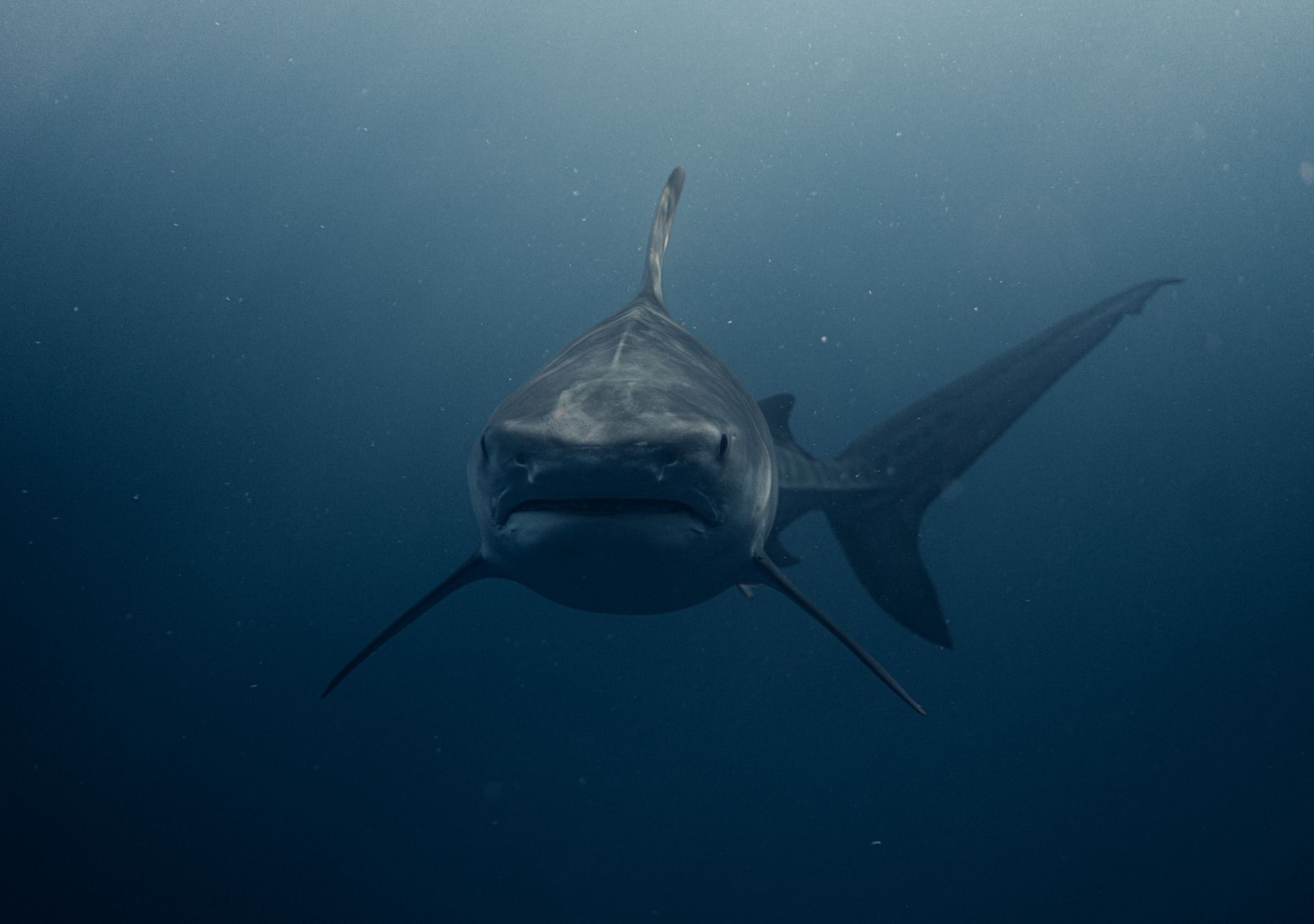
Sharks and rays have prowled Earth's oceans for more than 450 million years, outlasting dinosaurs, ice ages, and five catastrophic mass extinction events that wiped out the vast majority of life on the planet. Their remarkable evolutionary persistence has made them among the most successful predators in natural history, a distinction that continues to fascinate marine biologists and palaeontologists seeking to understand what sets these cartilaginous fish apart from countless other species that have vanished from the fossil record.
The survival of sharks and rays through successive waves of planetary crisis—from the Ordovician-Silurian extinction 443 million years ago to the Cretaceous-Paleogene event 66 million years ago that claimed the dinosaurs—suggests they possess biological and behavioural adaptations that confer exceptional resilience. Scientists now argue that understanding these survival mechanisms could offer insights into how marine ecosystems might respond to contemporary environmental pressures, including ocean acidification, warming waters, and overfishing.
Ancient origins and evolutionary advantage
The earliest sharks emerged during the Ordovician period, long before the first dinosaurs roamed terrestrial landscapes. Fossil evidence indicates that by the Silurian period, these primitive cartilaginous fish had already established themselves as effective marine predators, a role they have maintained with remarkable consistency across geological epochs. Unlike the rigid skeletal structure of bony fish, sharks and rays possess skeletons composed of cartilage—a lighter, more flexible material that allows for greater manoeuvrability and energy efficiency in water.
This fundamental anatomical difference may have provided a crucial advantage during extinction events. The cartilaginous skeleton requires less calcium and other minerals to build and maintain, potentially allowing these predators to survive periods when nutrient availability plummeted in stressed oceans. Additionally, their body plan has proven so effective that evolution has maintained it with relatively minor modifications over hundreds of millions of years, a phenomenon known as evolutionary stasis that indicates a near-optimal design for their ecological niche.
The sensory systems of sharks and rays further enhanced their survival prospects. Their ability to detect electrical fields generated by muscle contractions in other organisms—a sense absent in most other fish—provided them with a hunting advantage that remained viable even when visual conditions deteriorated during extinction events or when prey species underwent rapid turnover. This sensory versatility meant they could adapt to changing food sources without requiring dramatic physiological restructuring.
Survival through five mass extinctions
The Ordovician-Silurian extinction, approximately 443 million years ago, eliminated roughly 85 per cent of all marine species. Yet sharks, despite being relatively new arrivals to the evolutionary stage, weathered this crisis. The subsequent Devonian extinctions, sometimes called the "Late Devonian extinction," unfolded over several million years between 375 and 359 million years ago, devastating reef ecosystems and removing three-quarters of all fish species. Sharks again persisted, their predatory role ensuring their continued relevance in restructured food webs.
The Permian-Triassic extinction event, occurring roughly 252 million years ago, stands as the most severe extinction crisis in Earth's history, eliminating over 95 per cent of marine species. Known colloquially as "The Great Dying," this event fundamentally transformed ocean chemistry and oxygen availability. Yet sharks survived, suggesting their metabolic flexibility and broad diet allowed them to exploit resources unavailable to more specialised competitors. The Triassic-Jurassic extinction 201 million years ago and the Cretaceous-Paleogene extinction 66 million years ago followed similar patterns: massive ecosystem disruption, yet continued shark survival.
Palaeontologists attribute this consistent survival partly to the ecological flexibility of cartilaginous fish. Sharks and rays occupy diverse niches—some are large apex predators, others are small benthic scavengers, and still others are filter feeders. This diversity meant that even if particular shark lineages succumbed to extinction, closely related species with slightly different ecological requirements often survived, maintaining the broader group's representation in recovering ecosystems.
Metabolic and reproductive strategies
Beyond skeletal and sensory advantages, sharks and rays possess reproductive and metabolic characteristics that may have enhanced survival during environmental crises. Many shark species practise internal fertilisation and extended gestation, producing relatively few, well-developed offspring rather than releasing millions of eggs into uncertain conditions. This strategy, while limiting population growth in stable times, buffers against catastrophic breeding failures during ecological disruption.
The metabolic rate of sharks—generally lower than that of comparably sized bony fish—offered another survival advantage. During extinction events when food became scarce, the ability to sustain oneself on reduced energy intake could mean the difference between extinction and survival. Some shark species can enter a state of reduced metabolic activity, further conserving energy during prolonged periods of environmental stress. This physiological flexibility contrasts sharply with more metabolically demanding species that may have faced starvation when their preferred prey disappeared.
Additionally, many sharks possess a low reproductive rate but achieve sexual maturity relatively late in life. While this limits their ability to rapidly expand populations, it also means populations do not collapse as dramatically when young individuals face high mortality rates. The demographic structure of shark populations, in other words, provided a buffer against the kind of cascading population collapse that may have devastated species with faster life histories.
Modern implications and contemporary challenges
The evolutionary success of sharks and rays over 450 million years might suggest they are invulnerable to extinction. However, modern threats operate on timescales and with intensities unprecedented in Earth's natural history. Overfishing, which removes hundreds of millions of sharks annually, operates faster than reproduction can replace losses. Habitat destruction, particularly in coastal nurseries essential for juvenile development, undermines population recovery. Ocean acidification and warming waters present chemical and thermal stresses beyond those encountered during past extinction events, as the rate of change is orders of magnitude faster than in previous geological crises.
Scientists emphasise that past survival through mass extinctions offers no guarantee of survival through the Anthropocene—the current geological epoch dominated by human activity. The adaptations that enabled sharks to weather the Permian-Triassic extinction or the asteroid impact 66 million years ago may be insufficient against simultaneous threats from fishing pressure, habitat loss, and rapid climate change. Several shark species are now classified as vulnerable or endangered, a status unimaginable for a group that has survived every major extinction event.
Research into shark and ray resilience therefore serves a dual purpose: it illuminates the deep history of marine life and the mechanisms underlying evolutionary success, while simultaneously highlighting the urgency of contemporary conservation efforts. Understanding why these predators survived when others perished may inform strategies to protect them now, ensuring that a lineage spanning 450 million years does not succumb to a single century of human-driven environmental change. The survival of sharks and rays through Earth's most catastrophic crises ultimately underscores not their invulnerability, but rather the extraordinary fragility of ecosystems when pressures exceed the bounds of evolutionary adaptation.