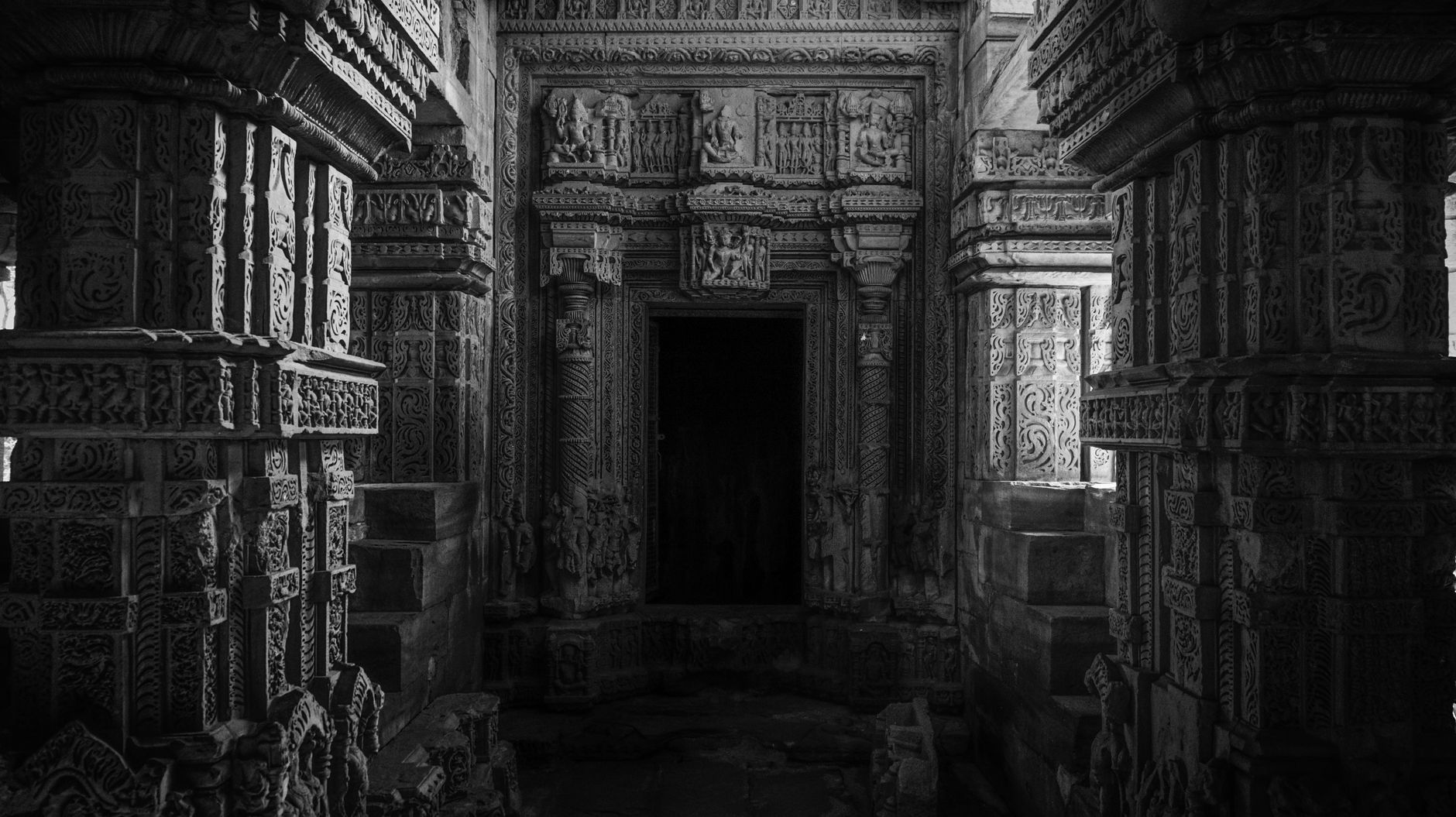
A 1,500-year-old stone inscription in Rajasthan preserves one of the world's earliest known representations of zero, reshaping our understanding of numerical innovation.
In a modest village temple in Rajasthan lies one of humanity's most profound mathematical achievements—a symbol so revolutionary that it transformed civilisation, yet so taken for granted today that few recognise its epoch-defining significance. The zero, represented on a stone tablet at Chaturbhuj Temple in Gwalior, dates back approximately 1,500 years, making it among the oldest surviving examples of this concept in tangible form anywhere on Earth.
The inscription, carved into sandstone during the reign of Raja Bhoj in the 9th century, stands as a testament to India's extraordinary contributions to mathematics and science. What might appear to modern eyes as a simple circular mark represents nothing less than a conceptual revolution—the formalisation of nothingness as a number, a notion that proved so intellectually challenging that many ancient civilisations never grasped it, despite their considerable mathematical sophistication.
The Discovery of Zero at Chaturbhuj Temple
Chaturbhuj Temple, dedicated to Lord Vishnu, sits in the town of Gwalior, approximately 118 kilometres south of the state capital Jaipur. The temple itself dates to the 11th century, though the mathematical treasure within it belongs to an earlier period. The stone tablet containing the zero symbol was originally part of a larger inscription documenting a land donation, a common administrative record of the era. Yet embedded within this bureaucratic notation lies a mathematical milestone that would eventually reshape human knowledge.
The zero appears as part of a numerical notation indicating area measurements—specifically, a measurement of 270 by 187 hastas (an ancient unit of length). The symbol itself is unmistakable: a small circle, positioned exactly where modern notation would place a zero. This may seem unremarkable to contemporary observers accustomed to decimal notation, but the implications were staggering. For the first time in recorded history, zero was not merely a concept or a placeholder, but a fully legitimised numerical entity worthy of inscription in stone and official record.
The Global Race to Formalise Zero
The history of zero extends far beyond India, yet India's role remains singularly decisive. Ancient Babylonians, around 3,000 years ago, used a placeholder symbol in their sexagesimal (base-60) system, but they never conceived of zero as a number itself—merely as a space-filler. Similarly, the Maya civilisation in Mesoamerica developed a sophisticated understanding of zero independently, yet their mathematical system never achieved the practical versatility of the Indian decimal model.
What distinguished Indian mathematicians was their audacious leap: recognising zero not merely as the absence of quantity, but as a quantity in its own right. This conceptual breakthrough emerged gradually across centuries. The earliest textual references appear in Indian astronomical and mathematical texts dating to around the 5th century, including works by the mathematician Aryabhata. Yet the transition from theoretical acknowledgement to practical, standardised notation took several more centuries to crystallise fully.
The Gwalior inscription represents this crystallisation—the moment when zero transitioned from philosophical abstraction to administrative reality. Once zero was formally integrated into the decimal system, the mathematical framework became exponentially more powerful. Complex calculations that would have required cumbersome notations in Roman numerals or other systems became elegant and efficient.
From India to the Islamic World and Beyond
The dissemination of zero beyond India's borders occurred primarily through the Islamic Golden Age. Arab mathematicians, particularly Al-Khwarizmi in the 9th century, encountered Indian numerical methods and recognised their superiority. The term "algorithm" itself derives from Al-Khwarizmi's name, reflecting the profound influence of Indian mathematical thought on Islamic scholarship. Arab scholars adopted the Indian decimal system wholesale, translating key texts and incorporating zero into their own mathematical frameworks.
From the Islamic world, the zero symbol and decimal system gradually penetrated Europe, though not without resistance. Medieval European scholars, steeped in Roman numeral traditions, viewed the new system with suspicion. The concept of zero was philosophically troubling to many—how could nothing be something? This resistance persisted until the Renaissance, when the practical advantages of decimal notation finally overcame cultural inertia. By the 16th century, zero had achieved near-universal acceptance in European mathematics and commerce.
The journey of zero thus encapsulates a broader pattern in intellectual history: India's innovation, the Islamic world's preservation and refinement, and Europe's eventual adoption and propagation. Yet the originating insight—the audacious decision to treat zero as a legitimate number—remained quintessentially Indian.
The Gwalior Inscription and Its Broader Significance
The Gwalior stone tablet is not merely a historical curiosity but a tangible anchor for one of the world's most consequential intellectual developments. The inscription sits today within Chaturbhuj Temple, a site that has attracted historians, mathematicians, and scholars for generations. The temple itself, with its 11th-century architecture and spiritual significance, provides a striking contrast to the mathematical profundity embedded within its walls—a juxtaposition that speaks to the integrated nature of knowledge in ancient Indian civilisation.
The preservation of this inscription represents remarkable fortune. Countless other stone inscriptions from the medieval period have been lost to weathering, destruction, or simple neglect. That this particular tablet survived intact, legible, and in situ within an active temple complex speaks to both the durability of stone and the continuity of institutional memory within India's religious structures. Temples often served as repositories of knowledge, and Chaturbhuj Temple has fulfilled that function for over a millennium.
Scholars continue to debate the precise dating and interpretation of the inscription. While the 9th-century attribution is widely accepted among mathematicians and historians, some variations exist regarding the exact reign during which it was commissioned. What remains indisputable is that the Gwalior zero ranks among the world's earliest confirmed representations of the numeral in formal, administrative context.
Why Zero Matters: From Ancient Calculation to Modern Computation
The practical impact of zero cannot be overstated. In systems without zero as a placeholder and numeral, performing arithmetic operations becomes exponentially more cumbersome. A merchant calculating trade volumes, an astronomer tracking celestial bodies, or an administrator managing land records—all benefited immensely from the clarity and efficiency that zero and the decimal system provided. What might have required hours of complex notation could be accomplished in minutes with decimal arithmetic.
The philosophical implications were equally profound. Zero introduced a fundamental conceptual shift in how humanity understood quantity and absence. It bridged the gap between the concrete (tangible quantities) and the abstract (the concept of nothingness), providing a mathematical language for both. This intellectual flexibility enabled subsequent developments in algebra, calculus, and ultimately modern science itself.
In contemporary terms, zero remains foundational to all digital technology. Binary code—the basis of all computing—is fundamentally a system built on zeros and ones. Every smartphone, computer, and digital device operates on principles that trace directly back to the Indian innovation of formalising zero as a number. The stone inscription at Gwalior thus connects the medieval mathematician's stylus to the silicon chip in modern processors—a lineage spanning 1,500 years.
Today, Chaturbhuj Temple stands as a quiet monument to intellectual courage. The zero symbol carved into its stone wall represents not merely a mathematical notation but a moment when human thought expanded to encompass new possibilities. In an age increasingly focused on rapid technological change, the Gwalior inscription offers a humbling reminder that some of the most transformative innovations emerge not from sudden breakthroughs but from centuries of gradual conceptual refinement—and that preserving and honouring such foundational achievements remains essential to understanding our present and imagining our future.