Indian wind energy manufacturers call for government support to compete globally, citing lack of parity with international rivals in export markets.
India's wind turbine manufacturing sector is pressing the government for targeted export-linked incentives and production-linked incentive (PLI) schemes for forging facilities, arguing that domestic producers face structural disadvantages when competing in international markets compared to their global counterparts.
The chief of the wind energy industry body has raised concerns that Indian manufacturers do not receive equivalent support when attempting to access markets outside the country, creating an uneven playing field against established competitors from developed nations who benefit from their own government backing.
The Competitiveness Gap
India has emerged as one of the world's leading renewable energy producers, with wind power forming a critical pillar of the nation's clean energy transition. However, the domestic wind turbine manufacturing industry faces significant headwinds in establishing itself as a global exporter. Unlike their counterparts in Europe, China, and the United States, Indian manufacturers operate without equivalent government support mechanisms that would allow them to price competitively and scale production.
The lack of like-for-like advantage becomes particularly acute when competing for export contracts. International buyers often factor in financing terms, export credit guarantees, and subsidised procurement that favour manufacturers from countries with mature industrial policies. Indian companies, by contrast, must navigate higher production costs and limited access to concessional export financing, making it difficult to undercut or match bids from established global players.
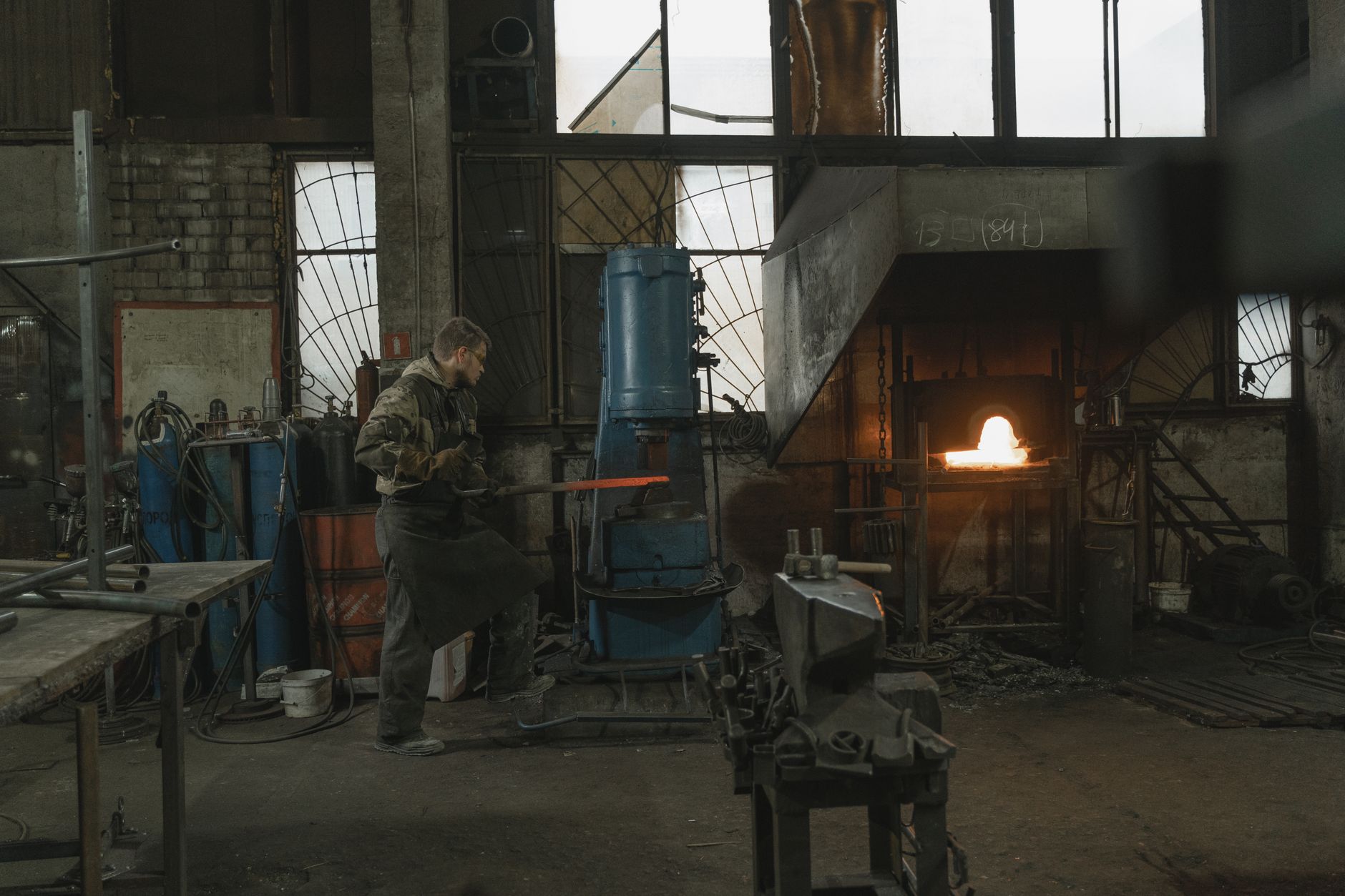
Forging facilities represent a critical bottleneck in the manufacturing chain. These facilities produce the heavy metal components—such as hubs, shafts, and structural elements—that form the backbone of wind turbine assemblies. Currently, India's domestic forging capacity for wind energy applications remains limited, forcing many manufacturers to either import finished forgings at higher cost or invest in establishing new facilities with significant capital expenditure.
Government Support Mechanisms Under Discussion
The industry body is advocating for two primary policy interventions. First, export-linked incentives would provide rebates or tax benefits on exported wind turbine equipment and components, reducing the effective cost to foreign buyers and improving India's competitive position in overseas tenders. Such schemes have proven effective in other sectors, including automobiles and pharmaceuticals, where they have helped Indian producers establish footprints in global supply chains.
Second, a dedicated PLI scheme for forging facilities would subsidise capital investment and operational costs for companies setting up or expanding forging capacity specifically for wind energy applications. The PLI approach—already deployed successfully in sectors ranging from semiconductors to advanced chemistry cells—ties government support to production targets, ensuring that subsidies translate into tangible manufacturing growth rather than merely reducing input costs.
The PLI model is particularly attractive for forging because it addresses both the investment barrier and the operational efficiency challenge. New forging facilities require substantial upfront capital, and without production targets to justify the investment, potential entrepreneurs hesitate to commit. A PLI scheme would de-risk this investment by guaranteeing a return on each unit of output, thereby encouraging new entrants and capacity expansion among existing players.
The Broader Renewable Energy Context
India's renewable energy ambitions are substantial. The government has set a target of 500 gigawatts of renewable capacity by 2030, with wind energy expected to contribute roughly half of this. Achieving this target requires not only domestic manufacturing capacity but also the ability to export surplus production and build India's reputation as a quality supplier in global markets.
Wind turbine manufacturing is capital-intensive and technology-driven, with significant barriers to entry. Established manufacturers have amassed decades of operational experience, proprietary designs, and established supply chains. For Indian companies to compete at this level, they require both scale and cost advantages. Scale comes from large domestic orders and export markets; cost advantages flow from efficient manufacturing and government support that levels the playing field against subsidised competitors elsewhere.
The renewable energy sector also offers substantial employment and skill development opportunities. Wind turbine manufacturing and its supply chain—including forging, casting, machining, and assembly—can employ thousands of skilled and semi-skilled workers. Expanding domestic capacity would create high-value jobs and support India's broader manufacturing ambitions articulated in initiatives such as 'Make in India'.
International Precedent and Competitive Dynamics
Other countries have long used export incentives and production support to nurture their renewable energy sectors. Denmark's wind industry, now a global leader, was built partly on government support and export promotion policies in the 1980s and 1990s. China's wind sector expanded rapidly with state backing and preferential financing for exports. The European Union's renewable energy directives have included provisions supporting domestic manufacturing competitiveness.
India is not seeking to create an entirely protected market but rather to ensure that its manufacturers can compete on a level platform. The distinction matters because protectionism—high tariffs and import bans—can backfire by insulating domestic players from competitive pressure and raising costs for end consumers. By contrast, time-bound, performance-linked incentives encourage efficiency improvements and innovation while gradually reducing the need for support as domestic players gain scale and experience.
The global wind turbine market is dominated by a handful of multinational corporations, most headquartered in Europe or with significant European operations. Some Indian manufacturers have begun making inroads into regional markets, particularly in Southeast Asia and South Asia, but breaking into the larger European and North American markets requires not only technical capability but also pricing power that domestic incentives would provide.
Implementation Challenges and Next Steps
Implementing export-linked incentives and PLI schemes for wind energy forging will require coordination across multiple government agencies, including the Ministry of New and Renewable Energy, the Department for Promotion of Industry and Internal Trade, and the Ministry of Commerce and Industry. The schemes must be carefully designed to avoid unintended consequences, such as encouraging low-quality production or creating unsustainable capacity that collapses once subsidies end.
Eligibility criteria will need to balance inclusivity with quality standards. Companies accessing these schemes would likely need to meet certain technical certifications, environmental standards, and labour practices. Production targets must be realistic yet challenging enough to drive efficiency gains. The timeline for support should be finite, with built-in review mechanisms to assess whether manufacturers are becoming competitive without ongoing subsidies.
The wind energy industry body is engaging with policymakers to refine these proposals. Industry consultations typically take several months, followed by inter-ministerial coordination and cabinet approval. Once approved, schemes usually become operational within six to twelve months, though details such as subsidy rates and eligible facilities may be fine-tuned based on pilot experience.
For Indian wind turbine manufacturers, securing these incentives could be transformative. With export-linked support and PLI-backed forging capacity, companies would be better positioned to bid for international projects, invest in research and development, and build the scale necessary for long-term competitiveness. For India's renewable energy goals, a robust domestic manufacturing base would reduce import dependence, create jobs, and position the country as a credible exporter of clean energy technology to developing nations in Asia and Africa seeking affordable renewable solutions.