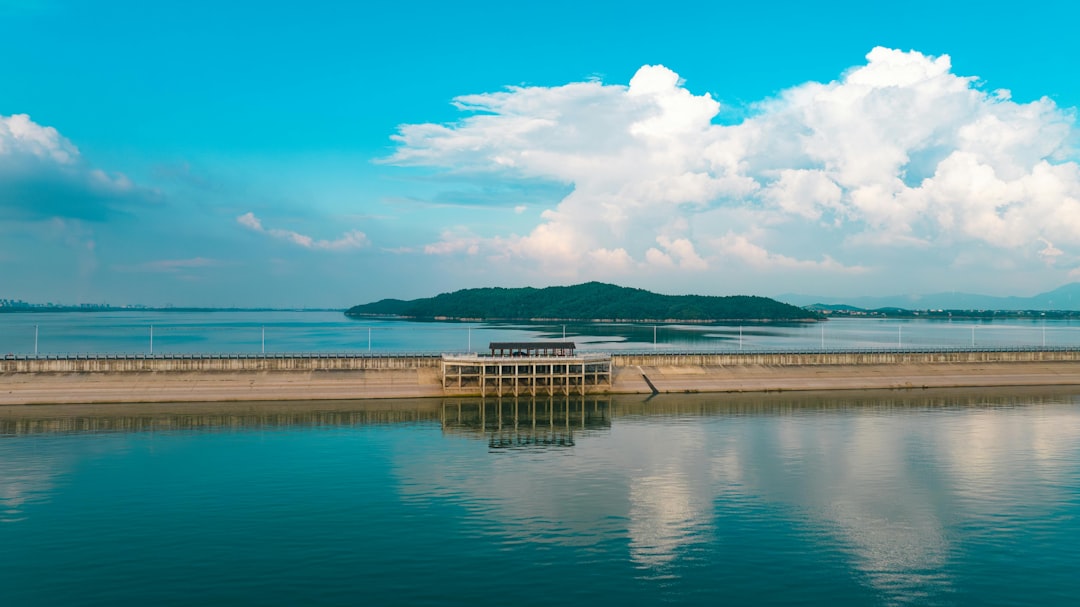
As India pursues ambitious clean energy targets, floating photovoltaic systems on reservoirs offer a promising solution to overcome land constraints while boosting storage efficiency.
India's renewable energy ambitions are running up against a familiar constraint: land. With the country targeting 500 gigawatts of renewable capacity by 2030, securing sufficient acreage for traditional ground-mounted solar installations has become increasingly challenging across densely populated regions. Now, planners and energy officials are turning to an alternative that could fundamentally reshape how the nation harnesses solar power — floating photovoltaic systems deployed on the country's vast network of reservoirs and water bodies.
This emerging technology, sometimes called "floating solar" or "floatovoltaics," places solar panels on specially designed platforms that sit atop water surfaces, transforming underutilised reservoirs into productive energy generation sites. The approach addresses multiple constraints simultaneously: it eliminates the need for additional land acquisition, reduces water evaporation from reservoirs, and improves the efficiency of solar panels through natural water-based cooling. For a nation where agricultural and industrial demands compete intensely for finite land resources, the potential is substantial.
The Land-Scarcity Challenge Driving Innovation
India's solar capacity has expanded dramatically over the past decade, growing from a negligible base to become one of the world's largest installed bases of renewable energy. However, this expansion has come with mounting pressure on land availability. Traditional utility-scale solar farms require large contiguous tracts of land, often in the range of hundreds to thousands of acres for even modest-sized installations. In states like Rajasthan, Gujarat, and Tamil Nadu — regions with some of India's best solar irradiance — competition for land has intensified between solar developers, agricultural interests, and industrial users.
The storage challenge compounds this issue. India's electricity grid operates on patterns of peak and off-peak demand, and solar generation fluctuates with daylight hours and weather conditions. Battery storage systems, while improving in cost and efficiency, remain expensive at scale. Water-based storage through pumped-hydro systems offers an alternative, but building new dams and reservoirs is environmentally contentious and time-consuming. Floating solar installations on existing reservoirs sidestep both the land acquisition problem and, to some degree, the storage integration challenge by being sited near water bodies that can serve dual purposes.
Government planners have recognised that floating solar represents a pragmatic pathway to accelerate renewable deployment without displacing agriculture or triggering prolonged land disputes. Several state governments and central agencies have already begun pilot projects, signalling official backing for the technology as part of India's broader energy transition strategy.
How Floating Solar Works and Its Technical Advantages
Floating solar installations consist of photovoltaic panels mounted on buoyant platforms — typically made from high-density polyethylene or aluminium — that are anchored to the reservoir bed or shoreline. Cables transmit the generated electricity to inverters on shore, where power is converted to grid-compatible alternating current. The systems are designed to withstand water movement, weather extremes, and seasonal water level fluctuations, making them substantially more complex than land-based installations.
The technical advantages extend beyond simply freeing up land. Water provides a natural cooling medium, and the proximity of panels to water keeps them at lower operating temperatures than they would reach on dry ground. Since solar panel efficiency decreases as temperature rises, this cooling effect translates into a measurable improvement in output — studies suggest floating systems can achieve 5 to 15 per cent higher efficiency than comparable ground-mounted installations, depending on local climate conditions and water temperature.
Additionally, the water surface beneath and around the panels experiences reduced evaporation. For reservoirs in semi-arid regions, this conservation of water is economically significant. Studies have indicated that floating solar can reduce evaporation losses by 20 to 30 per cent in certain climates, effectively protecting a valuable resource while generating electricity. This dual-benefit characteristic makes floating solar particularly attractive for water-stressed states.
Integration with existing hydroelectric facilities adds another layer of synergy. Many of India's major reservoirs are part of multi-purpose dam complexes that already include hydroelectric generation. Floating solar can be installed alongside hydroelectric turbines, allowing operators to optimise energy production across both renewable sources and manage grid stability more effectively. Solar generation peaks during midday hours, while hydroelectric output can be adjusted to complement solar production patterns.
Current Projects and Government Momentum
Several states have moved beyond planning to implementation. Pilot and demonstration projects are underway in multiple locations, though exact figures vary by reporting date. These projects serve dual purposes: they generate operational data on performance in Indian climatic conditions, and they demonstrate feasibility to stakeholders including state electricity boards, water resource departments, and private investors.
The central government, through agencies such as the Ministry of Power and the Ministry of New and Renewable Energy, has included floating solar in its renewable energy roadmap. This institutional support is crucial, as floating installations on reservoirs require coordination between multiple authorities — dam operators, water resource ministries, electricity regulators, and environmental bodies. Bureaucratic alignment, though sometimes slow, is gradually improving as awareness of the technology's benefits spreads.
Private developers have also begun exploring floating solar opportunities. The economics are increasingly attractive as panel costs continue to decline and installation techniques improve. For companies operating existing hydroelectric facilities, floating solar offers a way to expand renewable generation without acquiring new land or building new dams. Several renewable energy companies have expressed interest in developing floating projects on India's larger reservoirs.
Challenges and the Path Forward
Despite its promise, floating solar faces significant hurdles. Environmental concerns, though manageable, require careful assessment. The impact on aquatic ecosystems, fishing communities dependent on reservoirs, and algae growth patterns must be studied thoroughly. Large-scale floating installations could alter light penetration and water temperature dynamics, potentially affecting fish populations and water quality. These concerns are not insurmountable but demand rigorous environmental impact assessments and stakeholder engagement.
Maintenance and durability are practical considerations. Floating systems are exposed to harsh conditions — saltwater corrosion in coastal reservoirs, algal growth, bird droppings, and extreme weather events all pose challenges. The lifespan and maintenance costs of floating installations under Indian conditions are still being documented as pilot projects mature. Unlike ground-mounted systems, repairs and replacements require specialised equipment and expertise, potentially increasing operational expenses.
Regulatory clarity remains incomplete in many states. Policies governing floating solar installation on reservoirs, liability frameworks, and grid interconnection standards are still evolving. Streamlining these regulatory pathways will be essential to accelerate deployment beyond pilot-scale projects.
Water resource departments, traditionally focused on irrigation and hydroelectric generation, are adapting to the new reality of shared reservoir use. Coordinating schedules between water release for irrigation, hydroelectric operations, and solar panel maintenance requires careful planning. As floating solar matures, standardised protocols for multi-use reservoirs will become increasingly important.
Looking ahead, floating solar is likely to play a growing but complementary role in India's renewable energy portfolio. It is not a panacea that will single-handedly solve land scarcity or storage challenges, but it represents an important tool in a diversified approach to clean energy expansion. As costs decline further, as installation techniques improve, and as regulatory frameworks solidify, floating installations could eventually contribute several gigawatts to India's renewable capacity. For a nation committed to achieving significant emissions reductions whilst meeting rising electricity demand, harnessing the country's abundant reservoir surfaces represents a pragmatic and increasingly viable pathway forward.